
"coffee plant diseases"
5000 article(s) found

Is Yunnan Baoshan coffee variety small grain coffee? How much is Nanbaoshan coffee per jin?
Professional coffee knowledge exchange more coffee bean information please follow the coffee workshop (Wechat official account cafe_style) Yunnan small-grain coffee, Rubiaceae, coffee genus, planting areas are mainly distributed in Lincang, Baoshan, Simao, Xishuangbanna, Dehong and other states. Baoshan small grain coffee is native to Ethiopia or Arabian Peninsula. The main producing area of small-grain coffee is suitable to grow at 800-1800 above sea level.
Coffee cultivation techniques detailed explanation of planting knowledge of Coffee trees
Coffee, cocoa and tea are called the three major beverages in the world, and their output, consumption and output value all rank first. In addition to being used as a beverage, coffee can also extract caffeine and coffee oil; in medicine, it can be used as an anesthetic, stimulant and diuretic cardiotonic agent. Coffee pulp can be used to make wine, vinegar, pectin and molasses; dried pulp can be used as animal feed; dried fruit shell can be used as fertilizer and burning

[scientific proof] there are 8 advantages and disadvantages of drinking coffee! The first kind is the most attractive ~
Professional barista communication please pay attention to coffee workshop (Wechat official account cafe_style) coffee, discovered thousands of years ago, because of its special flavor and refreshing effect, so popular in the world, is the world's most flavor and health effect of the drink, has been named God's drink. Because coffee beans are rich in plant antioxidants, their antioxidant efficacy is even higher than that of similar cocoa and green tea.

One of the varieties of Arabica coffee is iron card coffee, which inherits its flavor gene.
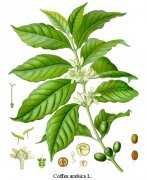
Professional coffee knowledge exchange more coffee bean information please follow the front street of coffee workshop (Wechat official account cafe_style)-Arabica coffee and pickup coffee are common shrubs of Rubiaceae coffee. There are about 40 species of plants under the coffee tree branch, of which there are only three kinds of coffee with commercial value-- Coffea Arabica and Arabica.

Control of Coffee Bark Moth, a Disease and insect of Garden plants
The adult is gray-white with a length of 15-28mm and a wingspan of 25-55mm. Male moth antennae are double pectinate in the middle and lower part, and the ends are linear. There are 3 pairs of blue spots on the back of the chest. The abdomen is white with black stripes. The front wing is white, translucent, covered with bluish blue spots of different sizes, and there are 8 bluish blue spots on the outer edge of the hindwing. Female moths are generally larger than male moths, with filamentous antennae. The eggs are round and yellowish. End

Interspecific hybrid variety | A variety derived from the cross between Alabi Karabusta and wild species
The exchange of professional baristas please pay attention to the coffee workshop (Wechat official account cafe_style) Interspecific hybrid variety [Centroamerica H1] Sarchimor T5296 x wild Rume Sudan, which is crossed between Alabi Carolbusta and wild species, dwarf, green top, planting density such as bourbon, 30004000 plants per hectare, medium-sized beans, low resistance to leaf rust

Introduction of Coffee knowledge Coffee Bean Variety types and Taste and Flavor
Professional coffee knowledge exchange more coffee bean information please follow the coffee workshop (Wechat official account cafe_style) Arabica (Arabica): first-class flavor and aroma of high-end coffee beans Arabica is a representative variety of origin in Ethiopia, in South Africa, Africa, Asia and other countries

Special Topics on Bourbon variants | introduction by Pacamara, Kaddura, Kaduai and Sachimo
In the process of coffee growth, there are many challenges, such as moisture, frost, diseases and insect pests, among which leaf rust is the most harmful. Natural things evolve under natural selection, and so do coffee trees. there are many varieties of coffee in the coffee world, either naturally mutated or artificially cultivated. We wrote an introduction to bourbon species before, and this time we

Why are Kenyan coffee beans all red? Historical Story and auction Department of Coffee cultivation and production in Kenya
How beans are processed: a specific agreement has been established during the processing of beans in Kenya, which can produce reliable and high-quality products, all processed by wet process. this tends to produce cleaner, brighter, more fruity cups. Kenyan coffee is mostly red because only fully mature red is selected during the picking process.

Coffee Art and Technology-Coffee plants and Classification-Why is the flavor of Katim coffee beans so bad?
Professional coffee knowledge exchange more coffee bean information please follow coffee workshop (Wechat official account cafe_style) Katim coffee beans coffee plants and plant classification coffee botanical classification coffee Rubiaceae characteristics of three kinds of coffee beans let us botanically subdivide coffee plants. Coffee is a shrub, part of the Rubiaceae family. Classification of 73

Does Ceylon black tea come from Sri Lanka? What are the famous tea garden brands in Sri Lanka? The development of Ceylon tea garden is affected by fungal diseases.
Managers of commercial tea gardens in Sri Lanka welcomed the government's decision to allow the import of nitrogen fertilizer, but they said the rubber and spice industry had also been hit hard by the ban on agrochemicals. So far, commercial tea gardens have been using some fertilizers imported from China because of rising prices, but they warn that

A brief introduction to the History and Culture of the Origin and Development of Arabica Fine Coffee beans
Arabica? The planting conditions of coffee are harsh, requiring higher elevations (above 2000 meters above sea level), fertile soil fertility, adequate moisture, proper sunshine conditions and shade. Arabica? Coffee tree species have poor ability to resist diseases and insect pests and are easy to be damaged. In addition, the annual output of coffee trees per unit area is also lower. At the moment? Arabica? Grow coffee

Yunnan Dehong Xiaoquan classmate coffee name source story_Xiaoquan classmate 2.0 is what kind of coffee?
Professional coffee knowledge exchange more coffee bean information, please pay attention to coffee workshop (Weixin Official Accounts cafe_style) before going up the mountain hearsay hundreds of thousands of words to pay attention to the matter of planting coffee trees, it is better to climb 1300 meters above sea level with wheezing, Xiaoquan students experimental planting site. This article may be obscure, but planting a tree is obscure and difficult in itself. 240 acres.

Which bourbon varieties evolved from bourbon have special coffee flavor?
Professional coffee knowledge exchange more coffee bean information please follow the coffee workshop (Wechat official account cafe_style) Arabica species evolved from the variety ● [Bourbon] Bourbon from the Typica mutation, and Typica is currently the closest to the original species, bourbon spread from southwest Ethiopia to Yemen, Bourbon was brought from Yemen in 1715 and 1718

Yunnan katim coffee beans good katim coffee characteristics profile
Professional coffee knowledge exchange More coffee bean information Please pay attention to coffee workshop (Weixin Official Accounts cafe_style) Qianjie coffee-Yunnan coffee Katim characteristics Introduction Yunnan Arabica coffee Yunnan Arabica coffee, Rubiaceae, Coffee genus, planting areas are mainly distributed in Lincang, Baoshan, Simao, Xishuangbanna, Dehong and so on. Yunnan coffee is a variation of Arabic original species, after long-term cultivation
Flavor description of Yunnan Tieka Coffee beans introduction to the characteristics of varieties produced by taste treatment
Flavor description of Yunnan Ironpika Coffee beans Typica: the oldest native variety in Ethiopia and southeastern Sudan, all Arabica are derived from Tibica. Elegant flavor, but weak physique, poor disease resistance, fruit production

Introduction to the Variety characteristics of Typica Coffee beans the flavor and taste characteristics of Tieka coffee
Typica Tiebika is the species name of coffee beans and is one of the oldest of many Arabica species. Iron pickup, also known as the old variety of small-grain coffee, its yield is less, cultivation is difficult, so the price is much higher than ordinary small-grain coffee. Tibica coffee is originally from Egypt.

Classification of Coffee beans Coffee Origin Coffee Coffee practice
Arabica was the only kind of coffee beans, then in the 19th century, there was a large area of diseases and insect pests, coffee growers began to look for other varieties of coffee resistant to diseases and insect pests, so Rob's special was discovered and began to be planted artificially. Robert's special growth in low-altitude areas, characterized by resistance to diseases and insect pests, cold, drought resistance, a word description, thick, but the taste is relatively comparative

When buying coffee saplings, do not buy from unknown sources, which can cause insect pests and infections in coffee trees.
Professional coffee knowledge exchange more coffee bean information Please follow the coffee workshop (official Wechat account cafe_style) although at present there is no sign of coffee fruit beetles in coffee gardens in Taiwan, because in recent years some people have imported undried coffee fruits from abroad for breeding purposes. If fruit with worms is introduced, these worms will spread everywhere, and I am afraid that in Taiwan

Description of Flavor of Iron pickup Coffee Bean introduction to the production area of Grinding Calibration Variety treatment
Description of the Flavor of Iron pickup Coffee beans Grinding scale Variety treatment area introduction to Typica: the oldest native variety in Ethiopia and southeastern Sudan, all Arabica are derived from Tibica. The flavor is elegant, but the physique is weak, the disease resistance is poor, the fruit yield is less. Jamaica Blue Mountain, Sumatra Manning, Hawaii Kona, etc.